In the application scenarios of extended-range passenger cars, commercial vehicles, and construction machinery, the motor controller must be able to withstand dust, vibration, heat dissipation, and the demands of long-term continuous operation cycles. The transition from using discrete components to integrated motor controllers is not only for saving space, but also directly relates to the normal operating time and warranty costs of the equipment. Based on real fleet data and engineering feedback, the following are the five most important factors for reliability improvement.

Cutting off wiring fault points
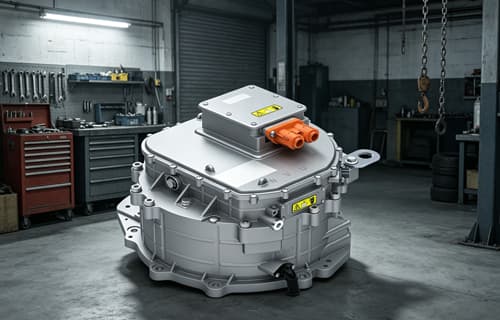
The discrete system has high-voltage cables laid at a certain distance between the controller and the generator. Every connector and crimping point in the connection of these two devices could be a fault point. While as an integrated motor controller, it cuts off the possibility of fault points from the root, avoiding a large number of risk points. This high efficiency integrated motor controller from WISEDRV adopts a crankshaft direct connection design, almost eliminating all external power wiring. Vehicles operated by operators have indicated that this integrated design greatly reduces the risk of loose or corroded connections in the controller.
More energy efficiency and durability
The efficient two-in-one motor and control system directly extends the lifespan of components while achieving energy savings. Our product achieves a system efficiency of 94.5% within the working voltage range of 230-490 volts, and can provide full power output within the voltage range of 380-490 volts. Compared with the discrete motor control system, this product can significantly reduce battery loss when providing the same torque output, and the saved energy is particularly crucial for extended-range passenger cars and electric commercial vehicles. At the same time, in actual use under slopes and full load conditions, its terminal temperature is lower than that of the discrete design. Combined with the liquid cooling cooling method (water-ethylene glycol ratio 50/50), this controller can still reliably provide a rated speed of 3500 rpm and a peak speed of 5000 rpm without reducing power, increasing the durability of the two-in-one product.
Resisting vibration and reducing maintenance costs
During the driving on uneven roads of construction machinery vehicles, the frame and powertrain will frequently suffer from damage caused by the vibration of the road conditions. Over time, many connection points will loosen, while as an integrated motor control system, the product is packaged together in one, reducing the external connection process. Many customers prioritize the industrial grade generator pris when choosing products, but often overlook the later maintenance costs. The integrated motor control system avoids maintenance costs that are far beyond the initial savings of the motor control system price, so choosing a high-performance two-in-one motor control system can not only achieve risk resistance but also help you save a cost budget.
The higher the integration, the fewer faults
In various types of practical applications, we have reached the same conclusion: the higher the integration of the product, the fewer boundary faults that occur. For heavy-duty applications, using a brushless motor integrated controller can further avoid the mechanical fault points that have always existed due to brush wear, thereby reducing the maintenance work deployment of the motor control system over thousands of hours of operation.
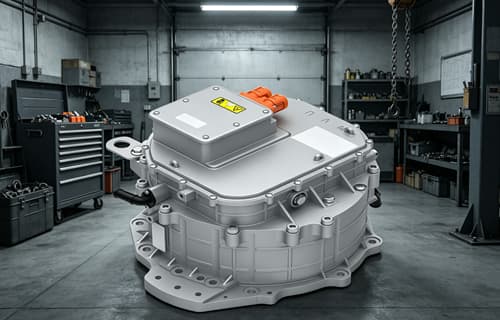
Choosing an integrated motor controller means reducing the number of cables, lowering the operating temperature, enhancing the vibration resistance, and achieving more intelligent and efficient processing. The two-in-one motor control unit designed by WISEDRV fully complies with the ISO26262 standard and the IP67 protection level requirements. These product features are the best proof that we have created more reliable and efficient motor control units for our customers.