When you pick an automotive spray booth, look at booth size, airflow, lighting, temperature control, and automation. Each part changes paint quality, shop safety, and how fast you work. For example, good airflow stops paint problems and helps you work faster. The table below shows how booth features change your results and safety:
|
Feature |
Paint Quality |
Safety |
Efficiency |
|---|---|---|---|
|
VOC Emission Control |
Meets EPA rules |
Lowers dangerous fumes |
Cuts waste and helps you follow rules |
|
Air Quality Protection |
Smoother finish |
Keeps workers safe from toxins |
Makes the shop nicer to work in |
|
Optimized Airflow |
Fewer mistakes |
Stops flammable vapor |
Dries paint faster and lets you do more |
|
Temperature and Humidity Control |
Paint sticks better |
Less chance of fire |
Less waiting between coats |
Pick booth size, airflow, and automation that fit your shop’s cars and work style for the best results.
 |
 |
Key Takeaways
- Choose the right booth size for your vehicles. A proper fit allows for better airflow and safer working conditions.
- Look for strong walls and doors. They protect your team and help maintain a safe working environment.
- Select an efficient heating system. Direct fire heating is best for quick drying and energy savings.
- Ensure good lighting in the booth. Bright, full-spectrum lights help you see details and avoid mistakes.
- Regular maintenance is key. Clean filters and check equipment often to keep your booth running well.
Key Features of a Quality Paint Booth
Booth Size and Vehicle Fit
Booth size is very important when picking a paint booth. You need enough room for cars and workers to move. If the booth is too small, air does not flow well. This can make paint jobs worse. Workers need at least three feet around each car. This helps them work safely and quickly. Different cars need different booth sizes. The table below shows what size fits each type:
|
Vehicle Type |
Interior Length (mm) |
Interior Width (mm) |
Interior Height (mm) |
|---|---|---|---|
|
Sedan/Coupe/Hatchback |
7,200 |
4,000 |
2,700 |
|
Large SUVs/Pickup Trucks |
8,250 |
4,300 |
3,600 |
|
Trucks and Trailers |
9,250 |
4,550 |
4,300 |
You can change booth size to fit your needs:
- Most full-size cars need a booth at least 10 feet wide and 10 to 11 feet long.
- Motorcycles or custom cars need a booth at least 16 feet wide and 5 to 6 feet deep.
- Assembly lines work best with booths at least 6 feet wide and with adjustable length.
- The right booth size helps you work faster and get better paint jobs. It also keeps your shop safe and stops delays.
Paint Booth Walls and Doors
Walls and doors keep your team and work safe in a paint booth. Strong walls last longer and protect everyone. The table below shows how wall materials change safety and durability:
|
Material |
Influence on Durability |
Influence on Safety |
|---|---|---|
|
Galvanized Steel |
Very strong and resists weather |
Meets fire safety rules |
|
Industrial PVC Coatings |
Makes walls tough |
Protects from chemicals |
|
Dual Skin Non-Flammable Insulation |
Stops heat from escaping |
Lowers fire risk |
|
Vinyl Coatings |
Easy to clean and looks good |
No glare and fewer hazards |
You can pick different door styles for your booth. The right door makes it easy to move cars in and out. Here are some choices:
- Swing doors open wide but need more space.
- Multi-fold doors fit many booth sizes and seal tightly.
- Roll-up doors save space and help with security.
- RollSeal doors are quick to install and easy to use. Good walls and doors keep your shop safe and help you work better.
Automation and Heating Features
New spray booth technology gives you more control and saves energy. Automation lets you change temperature, humidity, and airflow. Smart sensors and robots help you use less paint and work more accurately. You can pick different automation options.
Heating systems are also important for paint booths. You want heat that works fast and stays steady. The table below shows two main heating systems:
|
Heating System Type |
Efficiency |
Key Features |
|---|---|---|
|
Indirect Fire Heating |
Up to 70% |
Needs a chimney, reuses heat, loses some heat |
|
Direct Fire Heating |
Up to 90% |
No chimney, recycles hot air, dries paint faster, saves energy |
Direct fire heating works better. It heats up fast, saves energy, and keeps the booth warm. Keep the booth at least 70°F for good paint jobs. Some painters like 80-85°F for the best results. Automation and heating help you finish faster and save money.
Tip: For the best paint jobs, pick booths with AI or IoT systems. These let you control every part of painting and help you get perfect results.
A good paint booth lets you choose size, wall and door materials, and automation. Picking the right features makes your shop safer, helps you work faster, and gives you better paint jobs.
Airflow and Filtration in Automotive Spray Booths
Types of Airflow Systems
It is important to know how airflow systems work in a spray booth. There are three main types: downdraft, crossdraft, and semi-downdraft. Downdraft booths pull air from the top and push it out through the floor. This type gives you smooth finishes and better paint jobs. Crossdraft booths move air from one side to the other. These booths are good for small shops but can let paint mist move across the car. Semi-downdraft booths use both ways. Air moves at an angle, so it controls dirt better than crossdraft but is not as strong as downdraft.
|
Airflow System |
Advantages |
Disadvantages |
|---|---|---|
|
Downdraft |
Superior finish, excellent overspray control |
Higher cost, needs more space |
|
Crossdraft |
Cost-effective, good for small shops |
Risk of contamination, less overspray control |
|
Semi-Downdraft |
Economical, better airflow than crossdraft |
Dead zone at front, less effective than downdraft |
Importance of Laminar Airflow
Laminar airflow helps you get the same finish every time. Air moves in one direction and speed. This stops paint from swirling around. The steady air catches paint mist and takes away dirt in the air. You get a smooth coat on every car. Studies show laminar flow keeps air calm and stops random paint spots. This means you do not get bumps or rough spots and do not need to fix mistakes. Using more filters in the booth also helps paint stick better.
- Laminar airflow makes a safe place for painting.
- Turbulent airflow makes swirls and rough paint.
- A booth with laminar airflow gives you better paint and less dirt.
Filtration and Air Intake Plenum
A good filtration system is important for safety and paint jobs. Air comes in through the air intake plenum, which spreads air evenly. Filters on the ceiling use layers to catch dust and dirt. HEPA filters trap almost all tiny bits and keep the air clean. As air moves out, exhaust filters catch paint mist and send it away from the booth. You should check and change filters often to keep air moving well and protect workers from bad fumes.
- Intake and exhaust filters make air better and lower health risks.
- Changing filters often helps the booth last longer and keeps paint even.
- A good airflow and filtration system help you get smooth finishes and better paint jobs every time.
Lighting, Temperature, and Humidity Control
Optimal Lighting Features
Lighting shapes how well you see and paint inside an automotive spray booth. You need adequate lighting to spot every detail and match colors correctly. When you think about what to look for in paint booth lighting, focus on these points:
- Use white, full spectrum lights. These lights show true colors and do not add any tint.
- Place lights so every part of the car gets even light. This stops shadows and dark spots.
- Choose lights with a Color Rendering Index (CRI) of 85 or higher. High CRI lights help you see colors as they really are.
- Aim for 100-150 foot candles (about 1076 to 1614 lux) at three feet above the floor. This level lets you inspect and match colors well.
- If you do not have enough light, you might miss small flaws or paint defects. You may not see issues like mottling or poor blending. The color temperature of your lights also matters. Light at 5000K helps you see true color. Light at 6500K can show more surface problems, especially on light-colored cars.
Temperature and Humidity Control Systems
Temperature and humidity control play a big role in getting a smooth, lasting finish. You should keep the booth between 70 and 75 degrees Fahrenheit. Never let the temperature drop below 55 degrees, or the paint may not cure right. Both low and high humidity can cause trouble. Too much moisture can make the paint look cloudy or cause blushing. If the air is too dry or too wet, you might see orange peel or poor adhesion.
Here are the key benefits of temperature and humidity control:
- You get faster drying times, which means you finish jobs quicker.
- You lower the chance of mistakes, so you do not waste paint or time.
- You reduce the need for rework, saving money and materials.
- Modern booths use HVAC systems to heat or cool the air. Dehumidifiers and humidifiers keep the air just right. Airflow systems spread the right temperature and humidity everywhere in the booth.
Note: Stable temperature and humidity help paint stick better and look smooth every time.
If you control these factors, you get better results and happier customers.
Safety, Maintenance, and Installation
Safety Features and Compliance
When you pick an auto paint booth, look for safety features. These features keep you and your team safe from fire and fumes. They also help stop accidents. The table below lists the most important safety features you need:
|
Safety Feature |
Description |
|---|---|
|
Non-Combustible Construction |
Walls, ceiling, and floor must be made from non-combustible materials to prevent fire hazards. |
|
Airflow Management |
Air currents should direct toward the exhaust outlet to remove overspray and fumes. |
|
Exhaust Systems |
Adequate systems must expel hazardous fumes outside, with regular maintenance of filters and fans. |
|
Explosion-Proof Equipment |
Electrical equipment and lighting must be explosion-proof to prevent ignition of flammable vapors. |
|
Automatic Sprinklers |
Booths should have automatic sprinkler systems for fire suppression. |
|
No Smoking |
A strict no-smoking policy must be enforced within and around the spray booth area. |
You must also follow rules from different groups. These groups make safety rules for spray booths. Some of these groups are NFPA, OSHA, IFC, EPA, and local government. Each group has its own rules for safety and following the law.
|
Regulatory Body |
Description |
|---|---|
|
NFPA |
National Fire Protection Association standards for fire safety. |
|
OSHA |
Occupational Safety and Health Administration regulations for worker safety. |
|
IFC |
International Fire Code standards for fire prevention. |
|
EPA |
Environmental Protection Agency regulations for environmental safety. |
|
Local Ordinances |
Additional local regulations that may apply to spray booth operations. |
Maintenance and Cleaning Needs
You need to keep your spray booth clean and working well. Clean booths help you get better paint jobs and save money. If you do regular maintenance, you can find problems early. This helps your booth work better and last longer.
Keeping your booth clean is very important for good paint jobs. Regular maintenance helps your booth work its best. This also saves paint and lowers costs.
Here are some jobs you should do:
- Daily: Clean paint arrestor pads to keep air moving.
- Weekly: Check the ventilation and clean the filters.
- Monthly: Deep clean the booth and look at the seals.
- Annually: Have a pro check the booth and change all filters.
You should also change filters often:
- Primary intake filters: Every 4–6 weeks.
- Overspray or exhaust filters: Every 2–4 weeks.
- HEPA filters: Every 3–6 months.
- Carbon or VOC filters: Every 6–12 months.
A good maintenance plan helps your booth last longer. It also keeps your team safe.
Installation and Cost Considerations
Putting in a spray booth takes planning. You need permits, fire systems, and a licensed contractor. Make sure you have all your papers ready. You need proof of insurance and a license.
|
Requirement |
Description |
|---|---|
|
Permitting Process |
You may need to get permits yourself or your contractor can do it. |
|
Fire Suppression System |
All paint booths need a fire system, and you must get a permit for it. |
|
Contractor Licensing |
Your contractor must have a license and be registered with the city. |
|
Documentation |
You need a signed form, state license, and proof of insurance. |
Spray booth prices can be very different. Small booths can cost about $1,000. Big, fancy booths can cost over $50,000. The chart below shows the price range for different booth types:
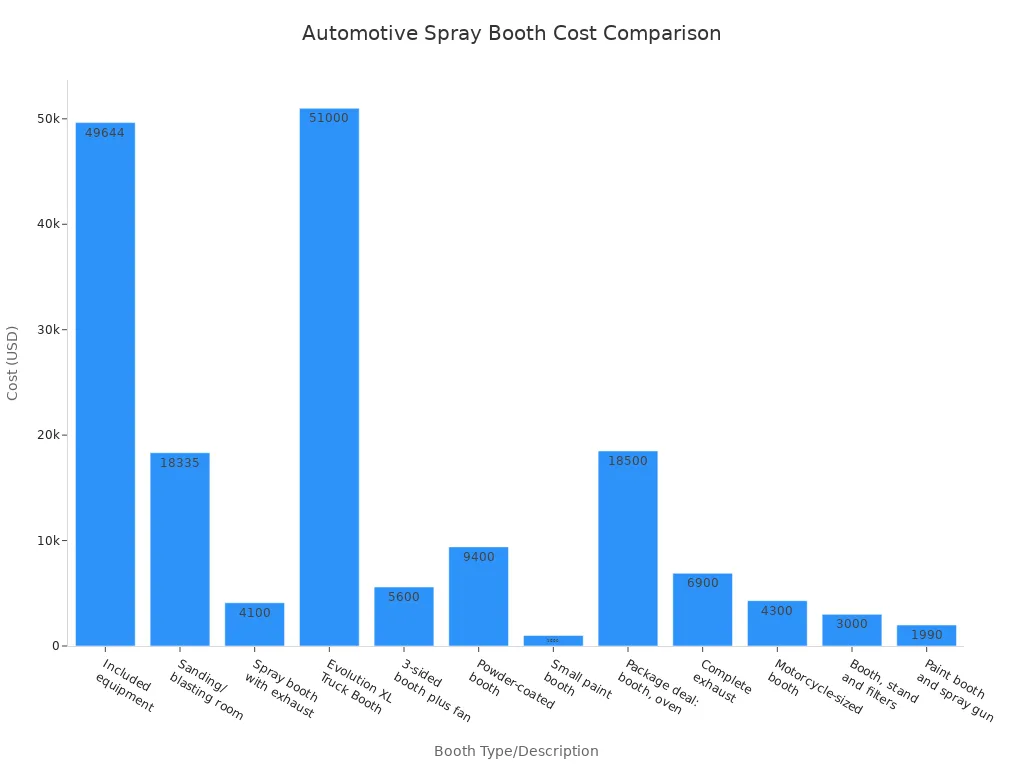
If you plan for safety, easy cleaning, and good installation, you protect your money and your team.
When picking an automotive spray booth, think about airflow and filtration. Lighting and safety are also important. Make sure the booth fits your shop and cars. Small shops need booths that save space and work well. Big shops do better with strong booths and smart controls. Do not forget to check and change filters often. Good lighting helps you see your work better. Ask experts or suppliers for advice if you are not sure. Shops with better booths finish jobs faster. Their customers are also happier.