Uneven wear on excavator track rollers usually indicates that the undercarriage is not distributing load evenly or that some components are operating under different conditions. Common causes include incorrect track tension, worn or misaligned track components, uneven ground contact, repeated turning in one direction, abrasive materials, and differences in roller condition.
The key to diagnosing uneven excavator track roller wear is to compare the wear pattern across the entire undercarriage rather than examining one roller in isolation. If rollers on one side wear faster, the cause may differ from a situation where the inner flange, outer flange, or center of individual rollers wears excessively.
YINTPARTS manufactures excavator and bulldozer undercarriage components, including bottom track rollers, carrier rollers, track chain links, sprockets, and front idlers. Understanding how these components work together helps equipment owners, maintenance teams, and parts distributors identify wear-related problems and select appropriate replacement parts.
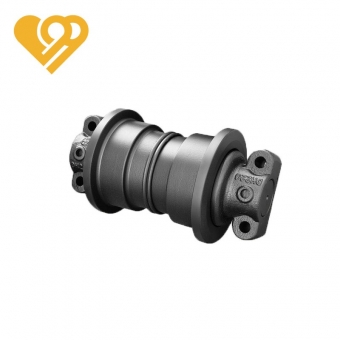
Bottom track rollers support the machine and guide the lower track run.
What Does Uneven Excavator Track Roller Wear Mean?
Uneven track roller wear occurs when rollers, or different areas of the same roller, lose material at different rates. Instead of developing a relatively consistent wear pattern under comparable operating conditions, some rollers show more severe surface wear, flange wear, scoring, or other damage.
The pattern matters because it can help narrow down the possible cause. For example, faster wear across one side of the undercarriage may suggest a difference in operating conditions, alignment, or component condition. Wear concentrated on a roller flange may indicate that the track is not running centrally or that related guiding components need inspection.
However, a wear pattern is a diagnostic clue, not proof of a single failure. The roller design, machine model, ground conditions, accumulated operating hours, and maintenance history should all be considered before deciding which component needs repair or replacement.
For machines requiring replacement components, YINTPARTS provides a range of excavator and bulldozer bottom track rollers. Matching the roller to the correct machine application is essential when addressing abnormal wear.
What Are the Main Causes of Uneven Track Roller Wear?
Uneven wear can result from a combination of operating conditions and mechanical problems. The most useful starting point is to compare the location, shape, and severity of the wear with the machine's working history.
| Possible cause | Typical clue | What to check |
|---|---|---|
| Incorrect track tension | Abnormal wear across several undercarriage components | Track sag and tension adjustment condition |
| Track or roller misalignment | Uneven flange wear or signs of side contact | Track alignment, idler position, roller mounting, and guiding surfaces |
| Uneven operating loads | One side or a group of rollers wears faster | Turning habits, slopes, load distribution, and travel patterns |
| Abrasive soil and debris | Scoring, abrasion, or material trapped around rollers | Ground conditions, cleaning frequency, and surface damage |
| Damaged or seized rollers | Localized wear, abnormal movement, or overheating signs | Roller rotation, seals, leakage where applicable, and bearing condition |
| Worn track chain or sprocket | Related wear or abnormal track engagement | Track links, pins, bushings, sprocket teeth, and component compatibility |
These symptoms can overlap. For instance, a machine working frequently on a slope may experience uneven loading, while an existing alignment issue can make the wear more pronounced. A reliable diagnosis combines visual inspection with the manufacturer's service procedures and wear limits.
How Does Incorrect Track Tension Affect Roller Wear?
Track tension influences the way the track chain moves around the undercarriage. If tension is outside the machine manufacturer's specified range, the track system may experience abnormal loading and increased wear on several components, including rollers, links, idlers, and sprockets.
A track that is too tight can increase resistance and place additional loads on the undercarriage. A track that is too loose may move less consistently and can create other tracking problems under certain operating conditions. Neither condition should be corrected by guesswork.
To check tension, follow the measurement procedure specified for the excavator model. The correct measurement may depend on track configuration, machine position, and the amount of material packed into the undercarriage. Do not apply a universal track sag measurement to every machine.
If adjustment is difficult or the tension does not remain stable, inspect the tensioning mechanism and related components. A qualified technician should investigate the underlying cause before returning the machine to service.

Track rollers operate as part of a connected undercarriage system.
Why Does One Side of an Excavator Wear Faster Than the Other?
When track rollers on one side wear faster than those on the opposite side, the first step is to compare operating conditions and mechanical condition on both sides. Differences in turning frequency, work direction, slope exposure, ground contact, and maintenance history may contribute to unequal wear.
Repeatedly turning in one direction can place different loads on the left and right undercarriages. Working on sloped ground may also change load distribution. These operating patterns do not automatically mean a component is defective, but they can help explain why wear develops differently.
Mechanical causes should also be ruled out. Inspect the track frames, roller mounting areas, idlers, track chains, and other guiding components for damage, abnormal positioning, or signs of side contact. Compare the wear pattern across several rollers rather than relying on a single component.
Where upper track guidance is also a concern, inspect the track carrier roller range as part of the broader undercarriage assessment. Carrier rollers support and guide the upper track run, so their condition should be considered separately from that of the bottom rollers.
What Does Uneven Wear on Track Roller Flanges Indicate?
Track roller flanges help guide the track and maintain its position. If one flange shows substantially more wear than the other, or if there are visible marks suggesting repeated side contact, the track's alignment and guiding components deserve closer inspection.
Possible contributing factors include track misalignment, worn guiding surfaces, damaged components, incorrect assembly, or operating conditions that repeatedly push the track sideways. The exact cause depends on the roller design and the machine's undercarriage configuration.
Check the following items before replacing a roller:
- Compare flange wear across multiple rollers on the same side.
- Inspect the front idler and other track-guiding surfaces for damage or abnormal wear.
- Check whether the track chain appears to run off-center.
- Inspect mounting areas and track frame components for visible damage.
- Use the manufacturer's specifications to assess alignment and wear limits.
Do not assume that a roller with flange wear is always the original source of the problem. Replacing it without correcting an alignment or guiding issue may lead to the same wear pattern developing again.
How Do Soil Conditions and Operating Habits Contribute to Uneven Wear?
Abrasive soil, rock fragments, demolition debris, and compacted mud can affect undercarriage wear. Hard particles may contribute to surface abrasion, while material packed around moving components can interfere with normal operation and make inspections more difficult.
Frequent turning on abrasive ground, repeated travel over uneven surfaces, and operating on slopes can also change the loads experienced by different rollers. These conditions may explain why wear is concentrated in particular areas rather than distributed evenly across the undercarriage.
Maintenance teams can reduce avoidable wear by removing accumulated debris, following the manufacturer's inspection schedule, and recording which ground conditions are associated with faster wear. Where practical, operators should also follow appropriate travel and turning procedures for the machine and job site.
The best maintenance interval depends on operating conditions and the machine manufacturer's recommendations. Equipment working in highly abrasive environments may need more frequent inspections than machines working on relatively clean, consistent surfaces.
How Can You Inspect Uneven Excavator Track Roller Wear?
A consistent inspection process helps distinguish normal wear from a developing mechanical problem. Instead of immediately ordering new rollers, document the wear pattern, compare components, and check related undercarriage parts.
Practical inspection checklist
- Record which rollers show the greatest wear and whether the pattern affects one side or both.
- Identify whether wear is concentrated on the roller surface, one flange, both flanges, or another specific area.
- Check for scoring, cracks, abnormal movement, oil leakage where applicable, and other signs of damage.
- Inspect track tension using the correct machine-specific procedure.
- Examine the track chain, sprocket, front idler, and carrier rollers for related wear.
- Review operating conditions, turning habits, ground type, and previous maintenance records.
- Compare measurements with the manufacturer's service limits before deciding whether a component needs replacement.
For safety, inspect the undercarriage with the machine secured and shut down according to the manufacturer's procedures. Keep clear of pinch points and stored mechanical energy. Repairs involving heavy components or track tension should be handled by qualified personnel using appropriate tools and equipment.
When Should Unevenly Worn Track Rollers Be Replaced?
Track rollers should be assessed for replacement when their measured wear reaches the manufacturer's service limit, when visible damage affects safe or reliable operation, or when inspection identifies a mechanical failure that cannot be corrected through appropriate maintenance.
Uneven wear alone does not always mean that every roller must be replaced. The decision depends on the severity and location of the wear, the condition of the remaining rollers, and the manufacturer's replacement recommendations. However, replacing only the most visibly worn roller without identifying the reason for the uneven wear can result in recurring problems.
Before ordering replacements, verify the machine make and model, serial number where applicable, existing part number, mounting dimensions, and roller design. Confirm whether the replacement is intended for the left or right position if the machine's configuration requires a specific part.
YINTPARTS offers different roller designs and machine applications through its excavator track roller product range. The correct selection should be based on fitment and specifications, not just visual similarity.
How Does Track Roller Manufacturing Quality Affect Wear Performance?
Track rollers operate under repeated loads, contact stress, and abrasive conditions. Material selection, heat treatment, machining accuracy, sealing design, and assembly quality can all influence how a roller performs in service.
YINTPARTS describes its track rollers as being heat-treated and machined, and its product range includes friction-welded and traditionally welded roller types. Its website also highlights machining accuracy and quality control as parts of its manufacturing process.
For buyers evaluating replacement rollers, it is useful to ask about the specific product's material, heat-treatment process, dimensional requirements, and inspection procedures. These details should be verified for the selected part rather than assumed to be identical across all roller models.
Manufacturing quality is only one part of service life. Even a well-made roller can wear unevenly if track tension is incorrect, the undercarriage is misaligned, the machine operates in highly abrasive conditions, or related components are already worn.
How Can You Reduce Uneven Wear on Excavator Track Rollers?
The most effective approach is to combine routine inspections, correct adjustment, suitable operating practices, and accurate replacement-part selection. These measures help identify developing issues before they lead to more extensive undercarriage damage.
- Maintain track tension according to the excavator manufacturer's specifications.
- Inspect rollers, idlers, track chains, and sprockets together instead of treating each part as an isolated component.
- Remove compacted mud and debris from the undercarriage as part of routine maintenance.
- Record wear locations and compare them during successive inspections.
- Review operating habits when the same side or roller position repeatedly shows excessive wear.
- Select replacement components that match the machine's model, dimensions, and required specifications.
For fleet operators and parts distributors, consistent inspection records are especially useful. Recording machine hours, ground conditions, component changes, and wear measurements can help reveal patterns that are difficult to identify from a single inspection.
Why Consider YINTPARTS for Excavator Track Roller Replacement?
When uneven wear requires replacement parts, the priority is to identify the correct component and determine whether other undercarriage issues need attention at the same time.
YINTPARTS, the website of Xiamen Yintai Machinery Co., Ltd., supplies excavator and bulldozer undercarriage parts, including bottom track rollers, carrier rollers, track chain links, front idlers, and sprockets. The company states that it can manufacture OEM parts according to customer samples, designs, or technical drawings.
When requesting a quotation, provide the machine make and model, serial number where available, existing part number, dimensions, and photographs of the worn component. If uneven wear is the reason for replacement, describe the wear location and whether the same pattern appears on other rollers. This information helps support part identification and a more useful technical discussion.
A replacement roller can address a worn component, but it cannot by itself correct every cause of uneven wear. Inspecting the complete undercarriage and correcting the underlying problem are essential to reducing repeat failures and unnecessary downtime.
Frequently Asked Questions About Uneven Excavator Track Roller Wear
What causes uneven wear on excavator track rollers?
Common causes include incorrect track tension, misalignment, uneven operating loads, abrasive ground conditions, damaged rollers, and wear in related undercarriage components. Inspect the wear pattern across multiple rollers to help identify the likely cause.
Why do excavator track rollers wear more on one side?
Uneven wear on one side may be associated with turning habits, slope exposure, differences in ground contact, or mechanical alignment problems. Compare both sides of the undercarriage and inspect the track-guiding components before deciding on repairs.
What causes track roller flange wear?
Excessive flange wear can indicate repeated side contact, track misalignment, worn guiding surfaces, or damaged components. The exact cause depends on the machine design and should be confirmed through a full undercarriage inspection.
Can incorrect track tension cause uneven roller wear?
Yes. Track tension outside the manufacturer's specified range can contribute to abnormal loading and wear across the undercarriage. Check tension using the procedure and limits specified for the machine model.
Should all excavator track rollers be replaced when one wears unevenly?
Not automatically. Assess each roller against the manufacturer's wear limits and inspect related components. The replacement decision should consider wear severity, component condition, and the cause of the uneven wear.
How can I choose the correct replacement track roller?
Confirm the excavator make and model, serial number where available, existing part number, mounting dimensions, and roller design. Share clear photographs and technical details with the supplier if the correct specification is uncertain.
For replacement excavator track rollers, contact YINTPARTS with your machine and component details. Correct fitment, systematic inspection, and identifying the underlying cause are important steps toward managing undercarriage wear.