Key Takeaways
-
Check track tension daily to prevent wear on sprockets, rollers, and chains.
-
Replace worn sprockets and idlers early to avoid damage to other parts.
-
Listen for grinding noises and stop work immediately to prevent major repairs.
-
Clean debris from the undercarriage daily to extend its life.
-
Follow a maintenance schedule and use quality parts to save money.
Track Tension and Wear
How Improper Tension Damages Excavator Undercarriage Parts
Improper track tension damages your excavator undercarriage parts in two opposite ways. Over-tensioning creates excessive friction and contact pressure between track bushings and sprocket teeth. This forces track links and rollers together and overloads roller bearings. Under-tensioning causes improper sprocket-to-bushing engagement, chipping, and abnormal wear. A loose track slaps against roller flanges and causes scalloping. Both extremes push your machine outside the narrow window of optimal tension.
Over-tight tracks drastically increase radial loads on track rollers and idlers, causing rapid tread and flange wear, overheated bearings, increased fuel consumption of up to 15%, and premature chain stretch.
The table below shows how each condition affects your undercarriage components.
|
Component |
Too Tight |
Too Loose |
|---|---|---|
|
Sprockets |
Excessive friction increases contact pressure with bushings, causing rapid wear on sprocket teeth. |
Improper engagement lets sprocket teeth impact bushings, causing chipping and abnormal wear. |
|
Bushings |
High contact pressure against sprocket teeth accelerates bushing wear. |
Teeth impact bushings improperly, causing chipping and abnormal outside wear. |
|
Rollers |
Track links and rollers are forced together, accelerating wear on running surfaces and overloading bearings. |
A drooping track slaps against roller flanges, causing scalloping and destroying hardened surfaces. |
|
Track links |
Constant high tension increases contact pressure on link joints and running surfaces. |
Slack causes shock loading, misalignment, and de-tracking, which can damage the track chain. |
Measuring and Adjusting Track Tension
You measure track tension by checking track sag. Park your excavator on level ground. Lift the track off the ground with the boom and bucket. Measure the distance between the track shoe and the carrier roller. Compare this measurement with the manufacturer's specification in your manual. Adjust the tension through the grease cylinder until the sag falls within the specified range.
Check track tension daily. A properly tensioned track reduces uneven wear and extends component life. Quality manufacturers supply replacement parts for these systems. Contact a trusted supplier for durable undercarriage solutions.
Worn Sprockets and Idlers
Early Signs of Common Excavator Undercarriage Wear Issues
You can spot most common excavator undercarriage wear issues long before a breakdown. Start with the drive sprockets. Healthy teeth have a rounded profile. Worn teeth turn hooked, sharp, or pointed like a shark fin. This shape no longer matches the chain bushing pitch. The mismatch cuts into the track links and speeds up damage on both parts. Check the idlers next. A flat or irregular idler surface changes how the load spreads across the chain. You may also notice track skipping, clanking noises, or reduced traction on slopes.
Cracked rollers and loose bolts are equally serious. Remove mud and grit from roller shells and brackets first. Then look for deep gouges, oil leaks, cracked welds, and missing hardware. Debris packed around the rollers holds moisture against metal and blocks lubrication. This promotes corrosion and grinds abrasive particles between moving parts. Machines in muddy conditions with poor cleaning can lose 30 to 50 percent of undercarriage life compared with machines that receive rigorous daily cleaning.
Replacing Worn Sprockets and Idlers
Measure tooth height with calipers or a depth gauge. Compare your reading against the manufacturer's minimum specification. Replace the sprocket when tooth height wear exceeds 50 percent of the original height. You should also replace it when you see noticeable sharpening, uneven wear, or frequent chain tooth skipping. For idlers, watch the flange. Replace the idler when flange wear drops below the manufacturer's limit.
Always replace sprockets and chain as a matched set. A new sprocket on a worn chain destroys both parts quickly. The same rule applies in reverse. Trusted manufacturers supply sprockets, idlers, rollers, and other excavator undercarriage parts that meet these replacement needs. Check for abnormal wear patterns on every inspection. Catching these signs early keeps your undercarriage running longer.
Mechanical Noises and Roller Failure
What Noises Mean for Rollers and Bushings
Grinding, rumbling, or clicking sounds during operation indicate metal-on-metal contact inside your rollers, bushings, or track links. These noises never resolve on their own. They signal that lubrication has failed and internal components now rub directly against each other. You should stop work immediately and inspect the affected area. Continued operation spreads damage to adjacent parts and turns a simple roller replacement into a full undercarriage rebuild.
The table below helps you match each noise to its likely source.
|
Component |
Noise Type |
Key Symptom |
Common Cause |
|---|---|---|---|
|
Track Rollers |
Grinding, rumbling, roaring |
Vibration during travel, flat spots, dark oil leaks |
Bearing wear, sand ingress, seal collapse |
|
Carrier Rollers |
Squeaking, clicking, screeches |
Upper chain wobble, frozen roller rotation |
Dry seals, contamination, grease purge |
|
Front Idlers |
Popping, squealing, deep growls |
Track derail risk, excessive carriage play |
Tension issues, bushing failure, spring fatigue |
|
Track Chains |
Sharp popping, snapping, clicking |
Pitch elongation, exposed bushings |
Pin and bushing wear, chain stretch |
|
Sprockets |
Loud snapping, metallic slapping |
Tooth hooking, shark-fin profile, asymmetric wear |
Pitch mismatch with worn track chain |
Listen for rhythmic grinding synced to track rotation. You may also feel vibration under load. Mud packing prevents rollers from turning, and the chain slides over the stuck roller. This action creates flat spots and sliding metal-on-metal wear. Seal failure in sealed and lubricated tracks lets lubrication leak out. Internal wear then accelerates into grinding contact. Worn links reduce link height until rollers strike the pin bosses. Rough resistance or lateral play during manual roller rotation confirms complete internal bearing disintegration.
Replacing Worn Rollers and Bushings Early
Early replacement prevents small faults from destroying connected components. Watch for uneven track movement, subtle abnormal vibration, or rough tracking. These signs appear long before major failure and signal uneven load distribution. Minor oil leakage around rollers indicates seal failure and lubrication loss. Excessive heat from individual rollers signals friction and load concentration. Stiff or jerky chain movement points to pin galling from lubrication film failure.
Rough sprocket engagement and unstable tracking signal bushing wall thinning and chain pitch elongation. This condition makes bushings vulnerable to cracking. Excessive track sag reflects incorrect tension and material buildup. Both dramatically increase stress on rollers, bushings, idlers, and sprockets. Replace worn parts before damage spreads to the entire assembly. Trusted manufacturers supply durable excavator undercarriage parts that meet these replacement needs. Quality components reduce wear on bushings and prevent excessive wear on the track links. Contact a trusted supplier for reliable solutions.
Operating Conditions That Increase Wear
Impact of Mud, Rocks, and Turning Patterns
Three main factors drive undercarriage wear: application, underfoot condition, and operating technique. The job itself sets the load. High-torque tasks such as excavating, trenching, ripping, or dozing push more stress through the drive system, so higher torque means faster wear. Ground conditions matter just as much. Rock, sand, and demolition debris are highly abrasive and can accelerate wear compared with moderate ground. Sand looks harmless, yet it grinds moving parts every time the tracks roll.
Rock, sand, and demolition debris are highly abrasive and can accelerate wear compared with moderate ground. Ground conditions are the biggest reason two machines on the same maintenance schedule wear differently, so site assignment should be treated as a maintenance decision.
Packed material makes things worse. Mud, dirt, and leaves cling to the roller frame and work into the undercarriage. This debris buildup adds weight, raises friction, and can seize components. In cold weather, frozen mud acts like concrete and stops rollers from turning, grinding flat spots into them. A thorough cleaning at the end of each day prevents most of this damage.
Turning habits shape wear symmetry too. Repeated turning in one direction concentrates wear on a single side. That pattern shows up as uneven wear and misalignment of tracks. Operators should alternate turning direction and reverse travel occasionally to balance the load across both sides.
Best Operating Practices for Longer Track Life
Good technique costs nothing and saves plenty. Limit high-speed travel, because track wear rises directly with speed. Reverse only for short distances and at low speed; for longer moves, turn the machine around and travel forward. Sharp, fast turns accelerate damage, so use wide curves or three-point turns instead. If you must pivot or counter-rotate, do it slowly.
On slopes, alternate your working direction to spread stress evenly. Avoid digging from the side, which creates cross tension, and never place excavating force on the rear sprocket when the front idlers should carry it. In extreme temperatures, reduce travel and turn speed. Quality manufacturers supply durable replacement parts when wear finally demands them.
Daily Maintenance and Professional Service
Cleaning, Inspecting, and Lubricating Track Components
You should start every shift with a quick walk-around of your machine. Remove mud, rocks, and debris from the undercarriage frame. Packed material hardens over time and acts like sandpaper on moving parts. A clean undercarriage also lets you spot problems during your visual scan.
Check for loose bolts and leaky seals as you inspect. Look at track links and shoes for uneven wear patterns. These patterns often signal alignment issues or worn bushings. Inspect track rollers, idlers, and sprockets for damage or missing hardware. Measure track sag at the midpoint between the drive sprocket and idler. Proper tension typically follows the manufacturer's specification for sag. This simple check prevents stress that shortens component life.
Lubrication keeps your undercarriage components working smoothly. Follow the manufacturer's maintenance guide for track rollers. Check roller lubrication regularly in harsh conditions such as wet or muddy environments. Raise the excavator to take the load off the rollers before you lubricate. Clean each grease fitting first, then apply lubricant with a grease gun. Avoid overfilling because excess grease attracts dirt. Inspect for oil leaks around roller seals and replace them if needed. These habits form the core of effective undercarriage maintenance.
Scheduling Professional Wear Inspections
You cannot catch every problem on your own. A trained technician detects issues that routine checks may miss. Professional undercarriage inspections give you a full condition assessment with repair or replacement recommendations. Schedule these visits based on your maintenance plan and operating conditions.
Use a tiered schedule for regular inspections and maintenance. Perform grease replenishment at each lubrication point on schedule. Check track chain link condition and drive gear clearance regularly. Measure chain track pitch and evaluate drive tooth chamfer periodically. Plan a track assembly flip and guide wheel bushing inspection at scheduled intervals. Periodically check chain track pin sleeve replacement and perform full vehicle bolt retightening. Scheduled service includes road wheel assembly disassembly and travel motor seal pack replacement.
Professional undercarriage inspections also include ultrasonic wear measurement, track pitch analysis, and oil contamination testing. These tools reveal internal damage before it spreads. When wear finally demands replacement excavator undercarriage parts, choose a trusted manufacturer. A trusted manufacturer produces high-quality track rollers, sprockets, idlers, and other undercarriage components that meet these needs. Pairing regular inspections with quality parts extends the life of your entire undercarriage system.
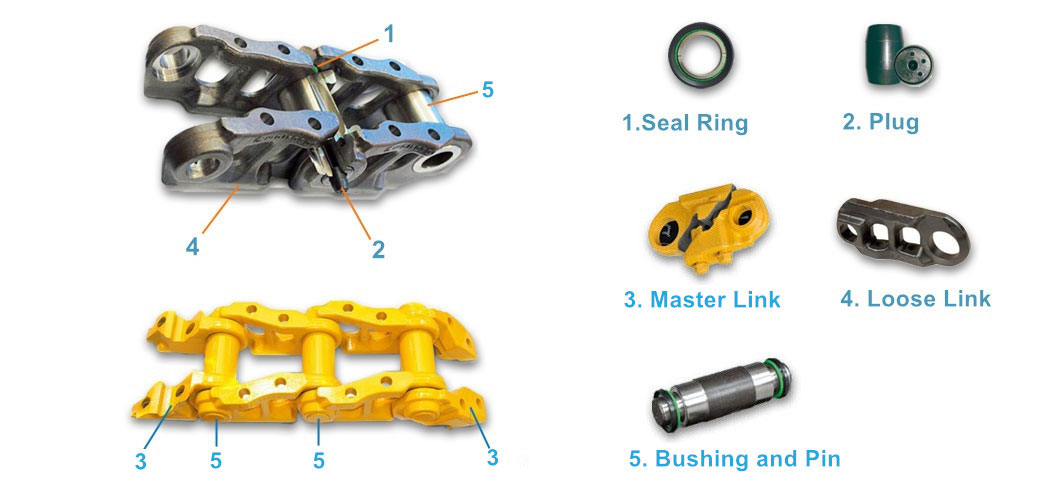
Check these five causes first: improper track tension, worn sprockets and idlers, mechanical noises, harsh operating conditions, and skipped maintenance. Early detection of undercarriage issues costs less than a full replacement. One ignored track roller can become a costly rebuild. Daily attention is the lowest-cost insurance for your most expensive excavator system.
Your daily routine determines your undercarriage lifespan. Measure the sag each morning. Follow a thorough inspection checklist. Remove debris and check for loose bolts. Schedule a professional wear analysis at regular intervals. Choose high-quality components from a trusted manufacturer when parts finally need replacement. These simple steps protect your investment and extend component life.
FAQ
Here are answers to common questions about undercarriage wear and maintenance.
How often should I check track tension?
Check track sag every morning before operation. Park on level ground. Lift the track with the boom and bucket. Measure the distance between the track shoe and carrier roller. Compare this reading with the manufacturer's specification. Proper tension reduces uneven wear.
What does a grinding noise from the undercarriage mean?
Grinding, rumbling, or clicking sounds signal metal-on-metal contact. Lubrication has failed inside rollers, bushings, or track links. Stop work immediately. Inspect the affected area. Continued operation damages adjacent parts. Replace worn components before failure.
Can operating conditions really cut undercarriage life in half?
Yes. Rock, sand, and demolition debris are highly abrasive. These conditions can accelerate chain wear compared with moderate ground. Mud packing adds weight and seizes components. Alternate turning direction. Limit high-speed travel and reverse operation.
When should I replace sprockets and idlers?
Replace a sprocket when tooth wear exceeds 50 percent of original height. Replace an idler when flange wear drops below the manufacturer's limit. Always replace sprockets and chain as a matched set. This practice prevents premature failure.
Where can I find quality replacement undercarriage parts?
Choose a trusted manufacturer. Quality manufacturers produce track rollers, sprockets, idlers, and other undercarriage components. Pair quality parts with regular inspections. This combination extends your undercarriage life.